



It is not always the player who takes the fewest strokes who wins but the one who does not betray himself, because, besides, between a player’s word — who decides to speak with all its consequences — and 4K zoom, golf already knows whom to believe
Golf was born on the presumption of honesty. If we travel in the DeLorean it is once again Bobby Jones who, in his day, took a forceful and exemplary step forward when he admitted to a ball movement that only he perceived, accepting the consequent penalty. What he did not know then was that that penalty stroke was the differentiating element that prevented him from successfully defending the title at the US Open of 1925 and, certainly, the cornerstone that defines the ethics and aesthetics of modern golf
Pure deontology does not regard that gesture as heroism but as obligation, as Platón said: “An unexamined life is not worth living”. In almost every sport the truth is decided first by a third party; in golf, sometimes, it is decided in a low voice when the player raises his hand and self-condemns, as Brain Davis at the 2010 RBC Heritage did while playing, no less, the playoff against Jim Furyk. This step forward shows that conscience remains the last referee and protects the essence and truth of the game
Davis hit his second shot from an area of tall grass with reeds and in the backswing he felt one of them move very subtly. The English player, who was never a media star and who came to the US seeking one of those defining victories, did not hesitate to call a rules official, explain what had happened and accept the corresponding penalty, even though there were no incriminating eyes from cameras, a referee or the crowd. A player’s word not only carries weight but decides money, records and legacy. The Londoner was another I classify as a “Martin” – and here I bring up my article “Diez mil horas, baby”, whose reading, dear reader, I recommend because the act of empathising will be almost automatic
As a good example of his “Martin” condition, Davis never achieved that victory on the main tour, but in his PGA career he won over 13 million. His exit from the scene was also discreet and he is probably remembered today more for this detail that evidenced his integrity and sporting spirit than for other, sometimes cruel or even satanic, aspects of the sport. Certainly, preventing these kinds of situations from recurring is what in 2019 led the thoughtful architects of golf’s intricate rules to change them so that touching grass or vegetation is not considered a penalty if it occurs during an ordinary swing and does not deliberately improve the conditions of the stroke
Davis lost a title because of his own confession. But today, in many tournaments, confession is no longer the starting point. It is the last layer of a technological review that decides above the player. Because golf is no longer played only with a word. It is played with cameras, with replays, even formerly with calls from spectators
And if not, just ask Craig Stadler, protagonist of “Towelgate “in 1987 at Torrey Pines. He was playing his third round of the Andy Williams San Diego Open when his ball ended up under a tree. To be able to hit he had to adopt a Seve‑style gesture and kneel, but because the ground was hard and full of gravel he put a small towel down to support his knees. From that position he executed the shot and all seemed fine, without glory, because by doing so he committed a rules breach by improving his stance with an artificial object
However, it was on the fourth day when a spectator — not just anyone but a professional from the Philadelphia club, Robert “Skee“ Riegel — who was watching the scene on delay and, believing — with that good faith that one must always presume — that his warning could help prevent Stadler from signing an incorrect card by failing to record the corresponding penalty, called to point it out
The great paradox is that his attempt to help caused exactly the opposite of what he intended because, as Stadler had already finished the round and signed his card, the only possible sanction was disqualification. Stadler had finished the tournament as one of the week’s best players and a few hours later the harshness of some golf decisions removed him from the equation with no right of appeal
This story had an impact on the tour because many subscribed to the disproportionality of a sanction in which the shot had not clearly improved the result, there were no on-course protests and, moreover, the alert came from the television ecosystem
The outcome of Towelgate is much more debatable if compared with what happened on the Friday of the 2013 Masters. At the 15th hole at Augusta, the same where Gene Sarazen executed the shot heard around the world that produced the only albatross made there, Tiger struck the flag with his second shot and the ball ended up soaking. When dropping, he decided to go back a couple of yards to repeat the distance of the shot, played from there, finished the hole with a bogey and continued the round
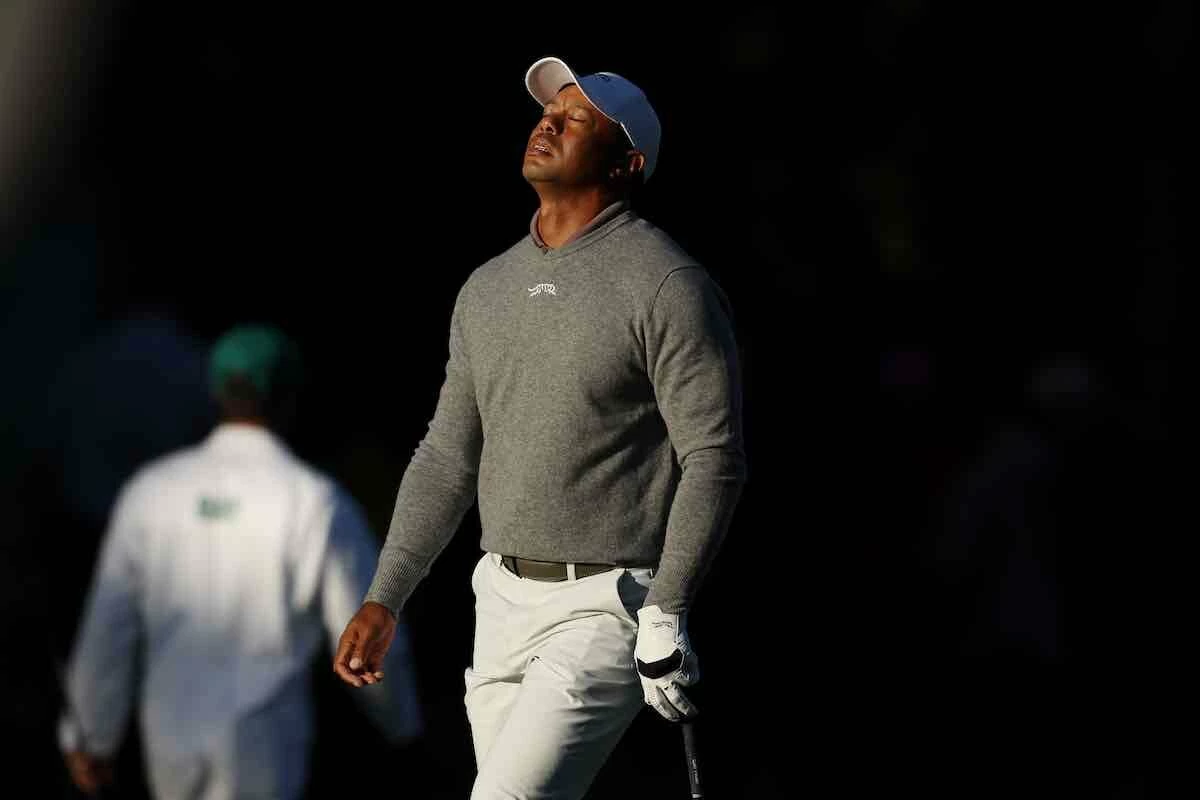
Meanwhile, again, a professional and rules expert, David Eger, saw the play on television, rewound the footage and suspected that the drop had not been made at the correct spot, so he called to alert Tour officials. The Masters committee was able to review the video during the round itself and concluded that there was no breach, which allowed Tiger to sign his card normally
However, hours later, in a television interview, Tiger himself explained that he had deliberately “dropped two yards further back”, which forced the committee to reopen the case. I cannot imagine the long night of difficult deliberations the forum members must have had to go through, removing any personal bias when the “affected” party was someone with the visibility and significance of a player who had just reclaimed the world number one spot
The final decision came the next morning and translated into two penalty strokes. There was no disqualification because they made use of the discretion and fairness that the rules allow when it is thought that their application would be unjust. In this case, Tiger had acted trusting the committee’s prior review. Again, the call that intended to prevent a problem ended up becoming one of the most famous rules debates in the history of golf and whose course, I believe, contrasts with the most unjust and at the same time most dignified moment seen in a women’s major
Although the absolute harshness of disqualification for an incorrectly signed card began to be softened in 2016, there are still incidents in which golf continues to debate between the purity of its ethics, the proportionality of its punishments and whether all golfers have a constitutional right to be equal before “the law”
Many of us still remember Lexi Thomson’s tears at the 2017 ANA Inspiration when the committee informed her on the 12th hole of the final round that she had received, no more and no less, four penalty strokes. It was a tough task to rebuild her figure and force a playoff against So Yeon Ryu after such a blow that, of course, cost her the victory. Her reaction under pressure, for being so impressive, deserves applause and recognition as much or more than if she had gone on to bathe in the Poopie’s Pond”
The trigger was, by all accounts and in her own words, an involuntary and practically imperceptible replacement of the marked ball on the green during the third round. This time, the infraction was spotted by a seasoned spectator, surely with a frustrated umpire vocation and photos of John Paramor and Justo Fernández in the TV cabinet, who reviewed the high‑definition images and alerted officials after Lexi had already signed her card
Jordan Spieth’s comment on the matter was very forceful and reflects how the golf world reacted because he categorically defended that spectators and fans should not be able to call to report infractions. Lexi’s tears contributed to a rules change in April 2018 to avoid that uncomfortable silent tension between conscience and “the tip‑off” continuing to exist in golf’s ethics
However, the old question remains intact: what should a player do when the only person who has seen the infraction is himself? And the greatest doubts arise when technology corrects the word, because then one could even question that spontaneous honour whose survival is being tested in a sport under surveillance…
We all know that golf is not played only against the course or against rivals but against oneself, and the true honour of golf — that which belongs to the spirit — begins where the cameras end, and real loyalty to the game, and to oneself, is evident when one is prepared to give oneself up even when it harms one. Even the intense Matt Wallace did not bargain with doubt in the second round of last year’s Valspar. He preferred to lose a stroke rather than his credibility and ended up gaining both by saving par at that 11th hole. And after a round, whatever the result, one can only ask whether one has truly lived up to the game