


The impact of the Ryder Cup is measured not only in up’s and birdies, but also in searches and trends. Through Google search data, it is possible to understand how interest in the tournament evolves, which players and countries attract attention, and which topics generate the most digital conversation. This analysis shows us how golf, a traditional sport, is now also experienced in terms of data in an increasingly digital environment.
The Rome effect: how digital interest in the 2023 Ryder Cup grew
Beyond the European team’s victory at Marco Simone, the 2023 Ryder Cup, held from 29 September to 1 October in Rome, became a global phenomenon in the digital realm as well.
According to the data collected, during the tournament period, there were 7,280,000 searches related to the Ryder Cup, with exponential growth: 450,000 searches in August, the month before the competition, 5,000,000 in September during the first two days, and 1,830,000 after the final day and the subsequent media aftermath of such a major event.
When analysing the geographical origin of these queries, the United States leads with 35%, followed by the United Kingdom with 22%, a country that had four representatives: Matt Fitzpatrick, Tommy Fleetwood, Tyrrell Hatton, and Justin Rose. Ireland, with Shane Lowry and Rory McIlroy, contributed 5% of the searches. Interestingly, Canada (4.4%) and Australia (3%) rank among the countries with the most interest, despite not having a direct impact on the competition.
As for the tournament’s protagonists, Rory McIlroy was crowned not only on the field but also on Google, with over 1,000,000 searches during the competition. He was followed by Viktor Hovland with 301,000 searches and, surprisingly, rookie Ludvig Aberg, who surpassed important players like Jon Rahm or Shane Lowry with 246,000 searches, establishing himself as one of the most searched names of the tournament.
On the American side, the player who garnered the most digital attention was Patrick Cantlay, with 165,000 searches during the tournament. His prominence, however, was not so much due to his sporting performance —he won two out of four matches— but to the off-course events surrounding him.
Cantlay made headlines for his wedding held in Rome just days before the start of the Ryder Cup, but also for the controversy over the use of the cap, interpreted as a protest gesture over the lack of financial remuneration for American players. The controversy reached its peak after the tense incident between his caddie, Joey LaCava, and the Irishman Shane Lowry.
How did the world experience the 2025 Ryder Cup from the search engine?
After reviewing the impact and stories that marked the 2023 edition in Rome, the Ryder Cup once again takes centre stage worldwide. The anticipation has continued to grow, and Google data confirms it: the 2025 edition has reached 11,730,000 searches globally between August and September, representing a 61% increase compared to the previous edition.
This strong growth in digital interest is largely explained by the extensive media coverage that accompanied the tournament being held on American soil, specifically in New York City. Added to this was a significant emotional factor: the pressure on the American team to win in front of their home crowd and redeem themselves after the defeat at Marco Simone.
The impact was particularly notable in the United States, which accounted for nearly 50% of global searches, 15% more than in the 2023 edition held in Europe. Behind it, the same pattern of countries with the most following remained: the United Kingdom (19%), Canada (5%), Ireland (4%), and Australia (2.5%), reflecting the consolidation of a global audience that follows each Ryder Cup with increasing intensity.
Team Europe vs. Team USA
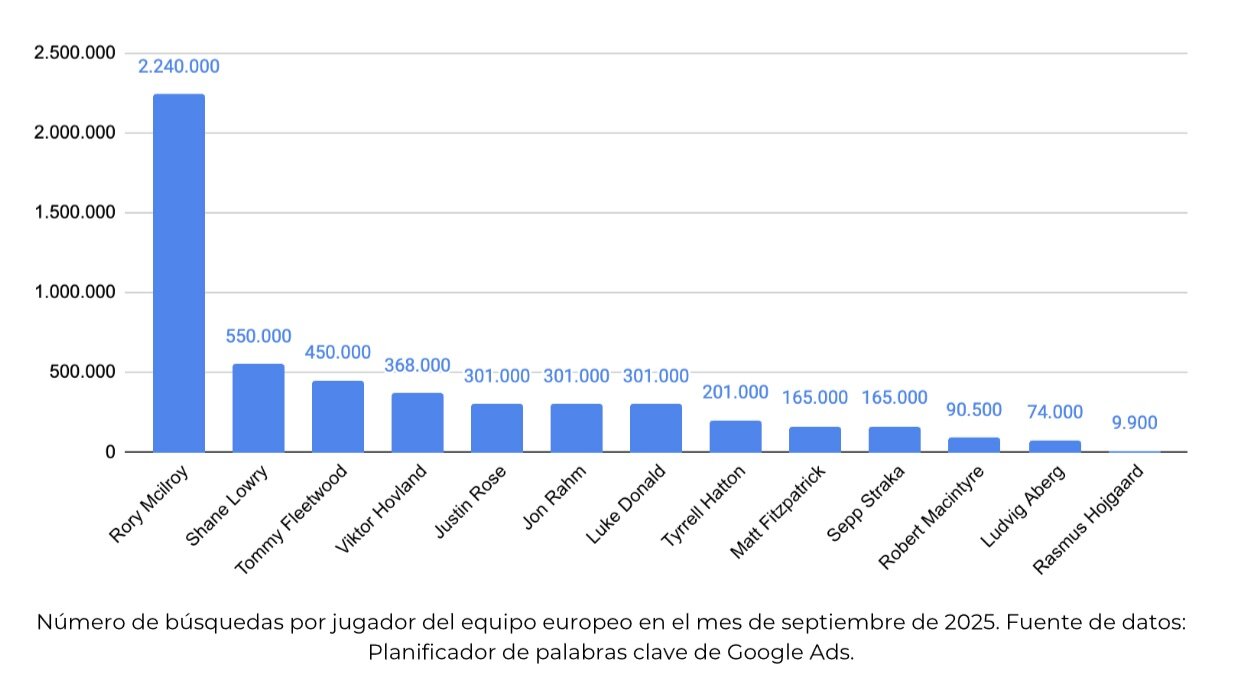
In the digital arena, the European team once again clearly prevailed. During the competition, there were 4,915,400 searches about European team players, far exceeding the figures for the American team.
Rory McIlroy once again emerged as the tournament’s major media figure, with 2,240,000 searches during the Ryder Cup. Although the Northern Irishman is a regular protagonist online, this figure falls short of his historical peak of 13.6 million searches reached in April, following his victory at the Masters in Augusta.
The second most searched European player was Shane Lowry, with 550,000 searches, undoubtedly driven by the decisive putt that sealed Europe’s triumph. Completing the podium was Tommy Fleetwood, with 450,000 searches, consolidating his popularity among fans.
Among the curiosities left by the digital analysis is the case of Viktor Hovland, who experienced a 50% increase in searches compared to the previous month, reaching 368,000 queries. The surge coincides with his injury during the morning foursomes session, which prevented him from playing his singles match against Harris English, and with the controversy generated around the tie and the well-known “envelope rule,” which once again grabbed headlines.
The American team failed to come close to the online impact of their European rivals. In total, the North American team players generated around 2 million searches, less than half of their Old Continent counterparts.
Leading the digital interest was Scottie Scheffler, with 673,000 searches, followed by Bryson DeChambeau, who accumulated 550,000. Justin Thomas completed the American podium with 135,000 searches, in an edition where the digital conversation once again reflected European superiority both on and off the field.
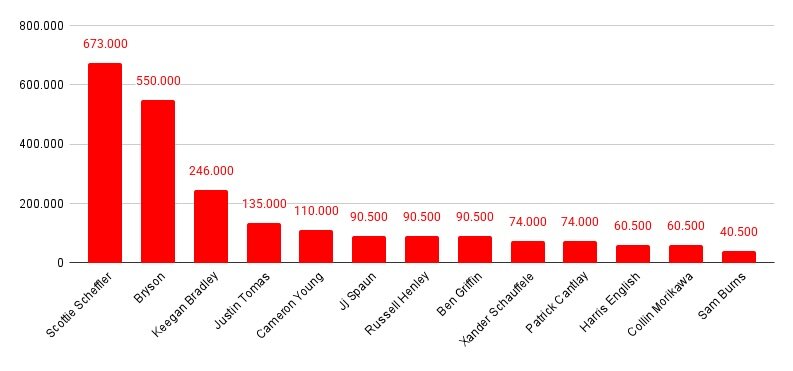
Number of searches per American team player in September 2025. Data source: Google Ads Keyword Planner.
European supremacy was even reflected in the digital realm among the captains of both teams. Luke Donald led the interest with 301,000 searches, surpassing Keegan Bradley, who accumulated 246,000 queries.
The difference is not entirely surprising, considering the harsh criticism Bradley received from the specialised press for his management during the days leading up to and during the competition, a debate that translated into a notable increase in searches about his figure.
The digital impact of Bethpage Black: search trends and field curiosities
In each edition of the Ryder Cup, interest is not limited to the players: the courses themselves capture the attention of fans. In 2023, Marco Simone Golf in Rome generated 135,000 searches, while in the 2025 edition, Bethpage Black in New York reached the impressive figure of 823,000 searches, establishing itself as one of the most searched golf venues.
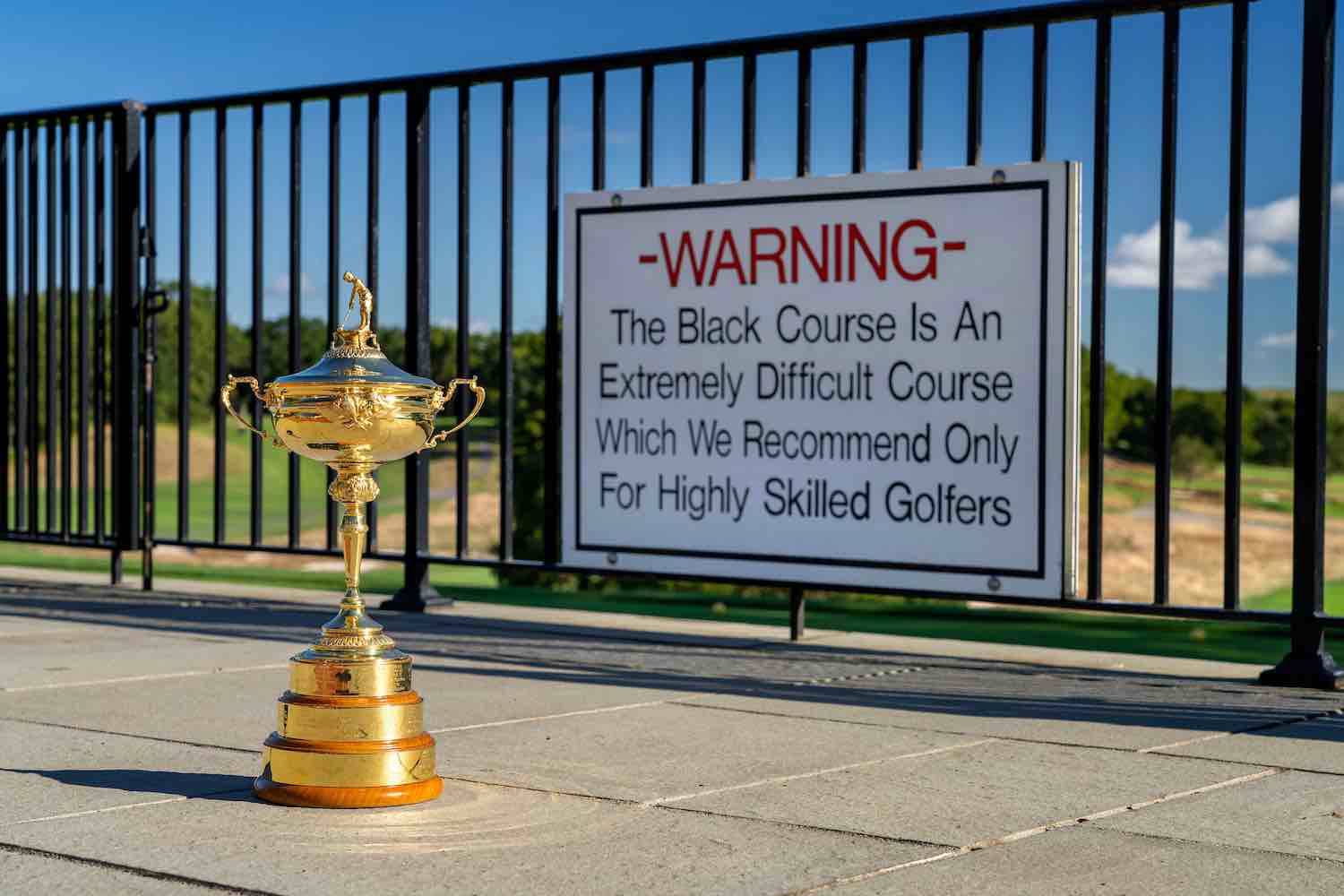
The digital following of the tournament even extended to the course details. There were 33,100 searches related to the course card and holes, while 4,400 fans wanted to know the cost of playing at Bethpage Black once the competition was over, showing how the Ryder Cup sparks curiosity both for the golf elite and the experience offered by the course itself.
New venues, same emotions: the road to future Ryder Cups
Even before the 2025 Ryder Cup had ended, fans were already focusing on the next event, the 2027 edition, which will be held at the prestigious Adare Manor in Ireland, began to generate interest during the competition itself, accumulating 301,000 searches worldwide.
The trend analysis reflects how enthusiasm for the tournament transcends borders. The United Kingdom accounted for 35% of the searches, while the United States contributed 18%, likely driven by the desire to reclaim a victory that has eluded them: the last on American soil was at Whistling Straits (2021), and in European territory, they haven’t won since 1993, when they triumphed by a narrow 15-13 at The Belfry.
Meanwhile, Ireland, the next host of the tournament, is beginning to feel the anticipation of such a major event. The country generated 8% of the searches related to the 2027 edition, a significant percentage that reflects both local pride and the global interest that is already starting to awaken for the Adare Manor course, a venue that promises to become the new epicentre of world golf.
Girona, the next world capital of golf: the 2031 Ryder Cup takes shape
Although there are still six years and two editions to be played, Adare Manor 2027 and Hazeltine 2029, the 2031 Ryder Cup is already beginning to spark interest online. Since it was officially confirmed in July that Camiral Golf & Wellness Resort, in Girona, will be the event’s venue, the tournament has started to generate movement in search engines.

According to global search data, the term “Ryder Cup 2031” averages 12,000 monthly queries, a modest but significant figure considering the temporal distance that still separates the tournament. The interest, as expected, is mainly concentrated in Spain, which represents 25% of the total searches, driven by local anticipation and the significance of the announcement.
In second place is the United Kingdom, with 21% of the total volume, reflecting the country’s strong historical connection to the competition. In contrast, the United States barely reaches 10%, a low proportion that could be explained by the attention still focused on the upcoming venues in North America. Even so, the trend suggests that interest will increase as the date approaches and preparations begin in Girona, which is already emerging as one of the great stages of international golf in the next decade.
Golf has changed, but its excitement remains intact
The Ryder Cup and golf, in general, have definitively entered a new digital era. It is no longer enough to lift the trophy; you must also conquer the screens. Searches, trends, and peaks of interest are now a new way to measure passion, an invisible metric that accompanies every shot taken on the course.
What started as a simple statistical curiosity has transformed into a mirror of the global pulse of golf. At each venue, in each edition, interest grows, diversifies, and expands, demonstrating that the tournament belongs not only to those who play it but also to those who follow it, comment on it, and search for it.
From Bethpage to Adare Manor, and with eyes already set on Girona, the Ryder Cup continues to write its history, now also in the language of search engines. And perhaps therein lies its greatest achievement: having evolved without losing its essence, keeping the excitement of always intact in a world that no longer just watches but also searches.