


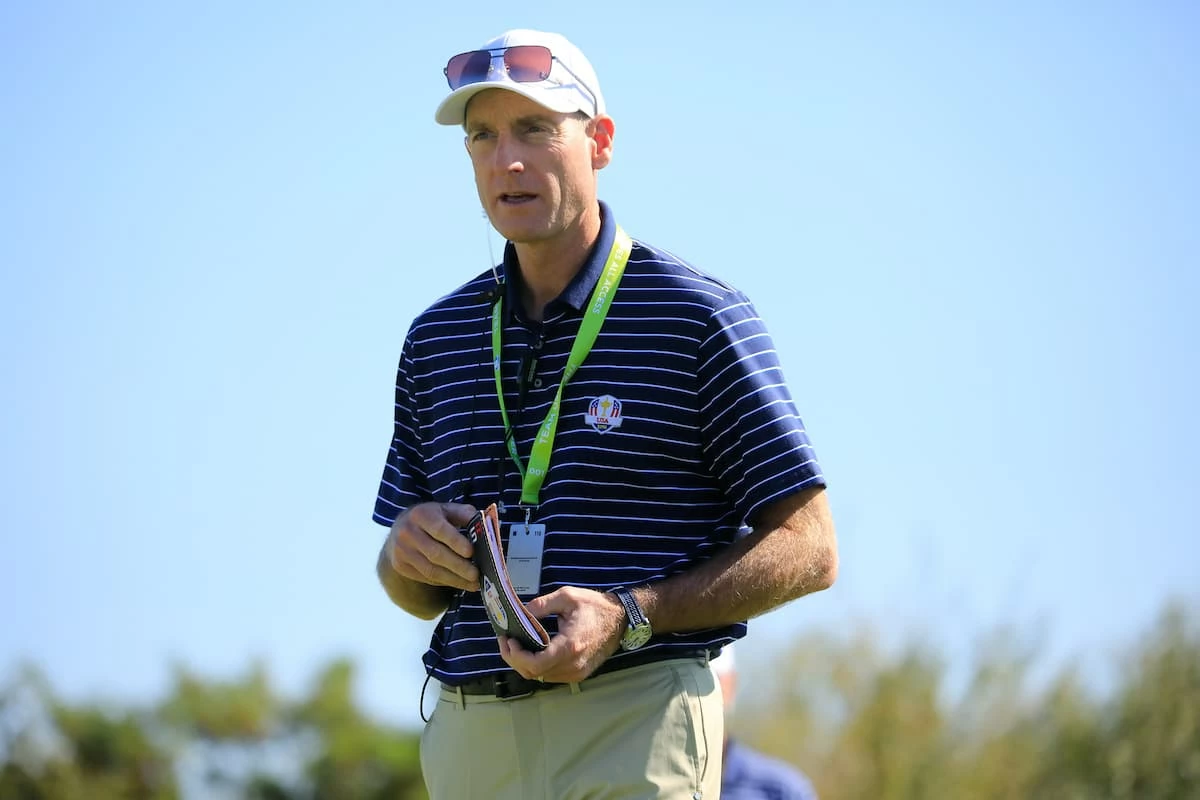
Jim Furyk made his debut this week as lead analyst for Golf Channel at the Arnold Palmer Invitational and did so by offering a highly significant reflection on the present and future of golf. Even before his television debut, the 2003 U.S. Open champion opened up a huge can of worms: reducing the size of the driver head for professionals. Nothing less.
He set out the idea on the podcast Straight Facts Homie, where he admitted up front that it was unlikely to be popular. Furyk’s point is that the current driver forgives too much, that it lets you hit it “at 110 per cent” with almost no penalty and that this has reduced part of the technical merit off the tee. His thesis is simple: with smaller heads there would be less tolerance for off-centre strikes, players would have to exercise more control and courses would not need to keep getting longer forever.
To explain it, he gave a very graphic example using his own equipment. He said he uses a mini driver instead of a 3-wood and that when he strikes it well the difference compared with a normal driver is small, less than ten yards. The problem comes when the impact is slightly off: then you lose a lot more distance. That, according to Furyk, is exactly what is missing from today’s professional golf: that error should be penalised more.
It is not exactly the same as the famous ball rollback promoted by the USGA and the R&A. That reform seeks to limit distance, but it affects everyone, not just the elite. Furyk, by contrast, proposes a different route: tinker with the driver only for professionals and leave the amateur player alone. In other words, finally separate the public debate from the supposed problem that professional golf is trying to solve.
The proposal carries a lot of weight because it does not come from a newcomer or any random agitator. Furyk was a major champion, accumulated 17 wins on the PGA Tour, captained the United States in the Ryder Cup and in the Presidents Cup and has just landed on the Golf Channel team as one of its most authoritative voices. When someone like that puts forward an idea of this calibre, it’s worth listening to. Even if only to debate it.
Furyk’s remark touches on one of the great debates in today’s golf. The game has gained power, athletes and speed, but it has also pushed many classic courses to the edge of their competitive viability. Furyk believes the solution is not just to tinker with the ball, but to return to the driver some of the risk it has lost over the years. It may sound unpopular, but it is certainly not unreasonable. It remains to be seen what manufacturers think. After all, they put equipment into professionals’ hands that is later intended to be sold on the high street.