


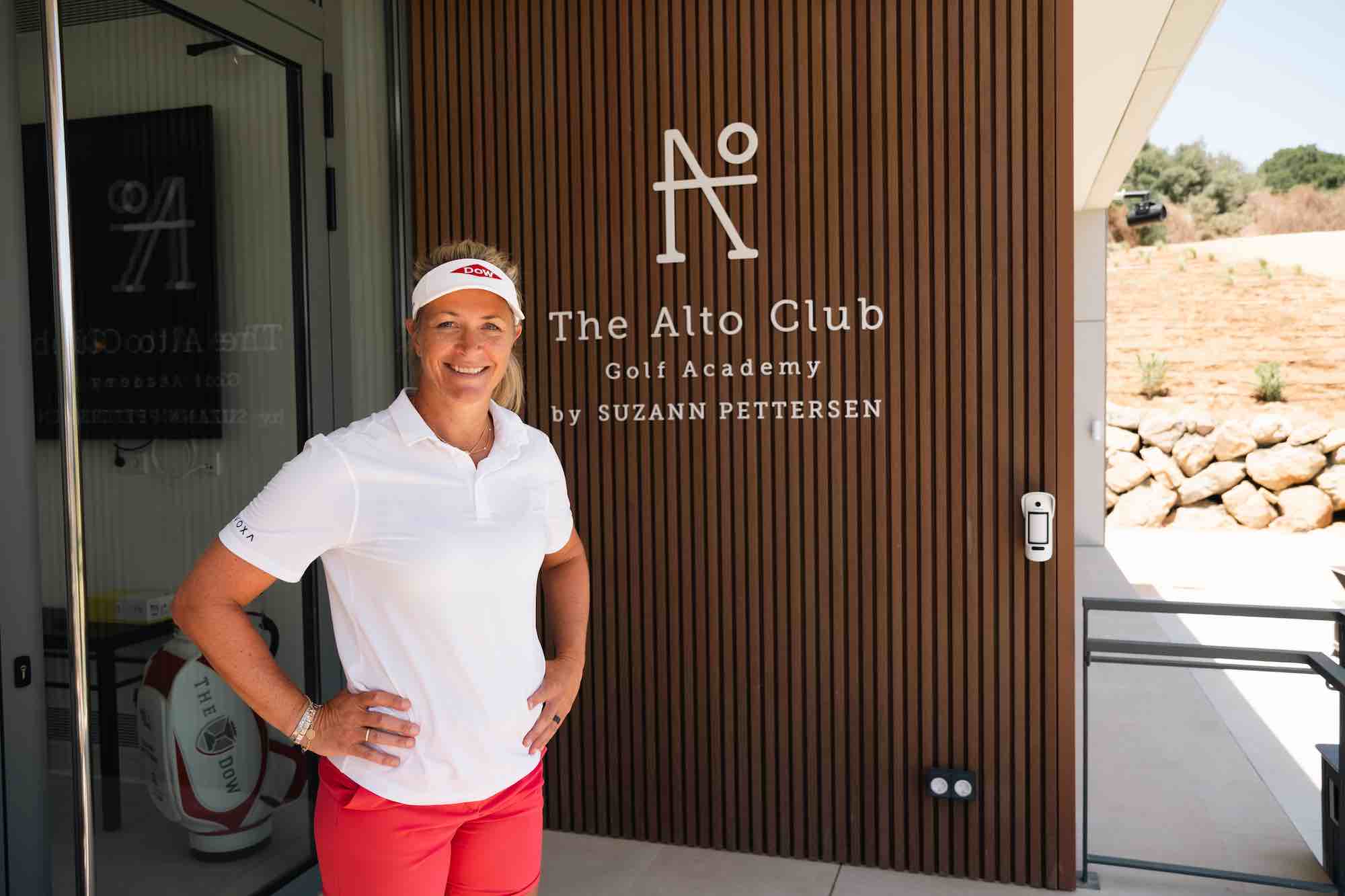
Suzann Pettersen knows exactly what it means to perform under pressure. With two Major titles, 15 LPGA Tour victories, seven Ladies European Tour wins, nine Solheim Cup appearances as a player and two European captaincies to her name, the Norwegian remains one of the most authoritative voices in women’s golf. Her talent, character, competitive spirit and unmistakable personality have made her one of the game’s leading figures over the past two decades.
Pettersen speaks to Ten Golf from Spain, a country with which she has been connected since childhood. She is now a Global Ambassador for Sotogrande’s The Alto Club Golf Academy, owns a home in the area and maintains a close relationship with the Costa del Sol. From there, she reflects on the present and future of Spanish women’s golf, the influence of Carlota Ciganda, the emergence of a talented young generation and one question that remains unanswered: when will Spain produce its first women’s Major champion?
Pettersen’s answer is clear: it can happen. And perhaps sooner than some might imagine.
Question. You have achieved so much in golf: two Major titles, Solheim Cup victories as a player and success as a captain. When you look back, which moment best encapsulates who Suzann Pettersen is as a golfer?
Suzann Pettersen. That is a difficult question. Every achievement has its own story. Obviously, winning for the first time is a huge step when you are young and have only just arrived in professional golf. It helps you understand that you genuinely have what it takes.
However, I would also say that, for me, perhaps the final one was the best. Holing the putt at the 2019 Solheim Cup at Gleneagles proved to me that I could return my game to the highest level and perform when it truly mattered, on a Solheim Cup stage that had meant so much to me and my career. It was incredibly special.
I also believe that what defines you as a player is not only your success, but the process behind it. Quite often, that process includes as much failure as success. You learn a great deal about your character when things do not necessarily go the way you want them to. I think you learn far more in those situations than you do when you win.
Success is the result of failing repeatedly until you learn how to find a way through. I feel that I have experienced every part of that journey.
Q. Let us return to that putt at Gleneagles in 2019, which secured the Solheim Cup. It remains one of the most iconic moments in women’s golf. What do you remember most vividly about it?
A. I remember that it took an enormous amount of work that week to feel comfortable and get my game to where I wanted it to be. Of course, you are there with the team, but I spent many evenings working to understand my own game.
Golfers are all very analytical. We are constantly trying to work this sport out. There were plenty of late nights spent fine-tuning and correcting certain things, and I felt that my form improved as the week progressed.
I think my game peaked on the Saturday afternoon, when it was very windy. But what I really remember is the Sunday singles match, when we were walking down the 18th fairway. I said to myself: “I’m starting to get too old for this.” The pressure, the adrenaline… I was thinking: “This is giving me far too many grey hairs.”
But then you have to execute. You have to be able to put the final points on the board. It was enjoyable, but I also felt an enormous sense of relief because I had been a captain’s pick. It may have been considered a slightly controversial selection because I had not played many competitive rounds after becoming a mother.
There was a great deal of pressure. I could feel it, although I also knew I could handle it. But when you deliver, it feels as though a thousand kilos have suddenly been lifted from your shoulders.
Q. You are now a Global Ambassador for The Alto CLub Golf academy in Sotogrande and also own a home in the area. What makes Sotogrande such a special place for you and your family?
A. Southern Spain, the Costa del Sol, Marbella… It has been part of my life since I was five years old. That was when we first started coming here. I spent a great deal of my youth in Spain during school holidays, Easter, autumn and the summer.
I played a great deal of golf at different courses throughout the area, so I have some wonderful childhood memories here. When the opportunity arose to work with the brand-new Alto Club Golf Academy in Sotogrande, it felt like another significant commitment to this part of the world and also an opportunity to help develop an excellent practice facility.
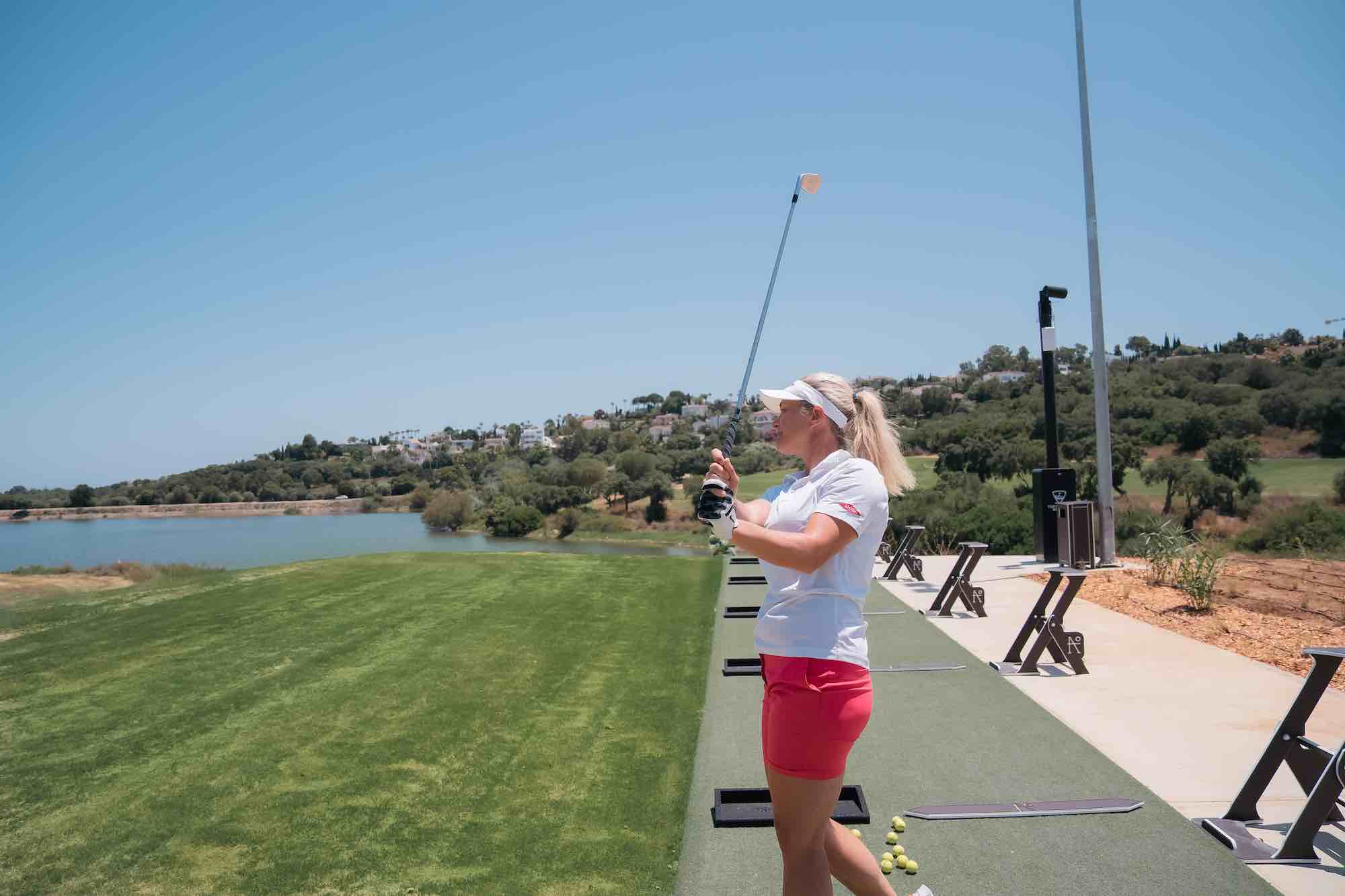
If there is one thing that I believe this coastline has perhaps lacked, it is a genuinely outstanding place to practise. There are many fantastic golf courses, but not necessarily as many places where you can spend an entire day training, with all the technology and facilities required by players of every standard.
Sotogrande is a destination with an extraordinary golfing tradition and some outstanding courses, but it is also a wonderful place to raise a family. There are excellent schools and a great community.
Q. From the perspective of an elite golfer, high-performance player and advocate for women’s golf, what potential do you see in Sotogrande as a destination for player development?
A. I believe that an academy should be a welcoming place for beginners and intermediate golfers, while also having the potential to support the very best players and those who genuinely want to become as good as they possibly can.
I want it to be somewhere where people feel welcome. I believe it is important to introduce golf to as many new people as possible. Our location in Sotogrande, immediately next to the international school, can help many children fall in love with golf and enjoy the game in the same way that I did when I was young.
It is a fantastic sport. It can keep you out of trouble, but above all, it teaches you excellent values. Most importantly, you make friends and have fun.
The Alto Club Golf Academy represents a new benchmark for golf instruction in Southern Europe, bringing together world-class coaching, cutting-edge technology and exceptional practice facilities in the heart of Sotogrande. Designed to support golfers of every age and ability, the Academy features state-of-the-art teaching bays, a dedicated short game area, expansive practice facilities including a Toptracer driving range and a unique nine-hole par-three course, creating the ideal environment to learn, improve and enjoy the game. The Academy reflects a modern coaching philosophy that places the individual golfer at its heart, combining technical excellence with an inclusive and inspiring approach to player development.
Q. The next Solheim Cup will be played at Bernardus Golf in the Netherlands. What will Europe need to do to regain the trophy, and what do you expect from Anna Nordqvist during her first spell as captain?
A. The European team is in extremely good hands with Anna as captain. She is a very organised person. She will not make any decisions at random. Everything will be carefully considered and thoroughly planned.
From the players’ perspective, I believe they will know exactly what to expect. Communication is always crucial, and I think Anna is already doing an excellent job of communicating with the group of players she knows could potentially be part of the team.
She has also assembled a strong support team because you cannot do everything alone.
It will be exciting. I believe both the European and American teams will feature many rookies. It is almost as though a new generation is taking over on both sides.
Q. Carlota Ciganda is one of the players represented by Voxa. What makes Carlota special, both as a player and as a person? Why does she remain so important to the European team?
A. First of all, Carlota is a very, very good friend of mine. We have spent many years together on the golf course and, through golf, we have developed a friendship that I value enormously.
I also do not know anyone who loves golf, or simply playing golf, more than she does. She loves competing, she loves practising and she loves golf. That is simply who she is.
Perhaps she does not enjoy all the other commitments that come with being a professional quite as much, but if you simply let her play golf, she could not be happier.
She has also been a tremendous role model for many of the Spanish girls now coming through, from the youngest players to those progressing through the university system. There is an enormous amount of potential within Spanish junior golf, and I am certain that Carlota is a major inspiration to them.
You can see on tour how she tries to support the new Spanish players, make them feel comfortable, share her experience and help them wherever she can.
I also believe she contributes to creating a very positive culture on tour. It sounds strange to say it, but Carlota is no longer a rookie. She is probably one of the most experienced players on the tour. She is also an extremely generous person.
Q. Spain is still waiting for its first women’s Major champion. Why do you think that breakthrough has not happened yet? Do you sense that it could happen soon, either through Carlota or another player?
A. I think it is connected to what we have just discussed. I would love to see Carlota achieve it. From tee to green, she is one of the best ball-strikers on tour. When she putts well, she is extremely dangerous.
She has come close before, and I am certain that she will contend in more Majors.
However, I also look at the new Spanish players who are currently at university. The girls playing at Stanford, Paula, Andrea… And Julia on the LPGA Tour. Some of these young players are very good. They hit the ball a very long way.
I would not be surprised if one of these emerging players potentially became Spain’s first women’s Major champion because they are very good. Very, very good.
Q. After building a career around competition, leadership and now supporting other athletes, what is the most important lesson you would share with a young Spanish golfer who dreams of winning Majors or playing in the Solheim Cup?
A. It is easy for me to share my own story, but I also tell young players that what worked for me will not necessarily work for them. You have to find your own path, driven by your own passion.
However, whatever you choose to do, sustained hard work will always pay off eventually. You need to be disciplined and believe in the path you have chosen.
I believe anything is possible. You can never dream too big. The bigger your dreams are, the better you can become.
It is fantastic to have the opportunity to help create a pathway for the next generation, allowing them to reach the tour and succeed.
It is great fun, and it is also rewarding for Voxa to be able to build that legacy.
Q. The final question is about Nelly Korda. She is currently the most prominent player in the world. What do you make of her? Could she become the greatest player of all time, or is it still too early to say?
A. She is still very young, but she clearly has the potential. If she wants to become the greatest golfer of all time, she faces some very strong competition. We are talking about players such as Annika Sörenstam and Kathy Whitworth.
She will need to add many more Major titles and victories, but she is on an excellent path.
Her game is very well suited to many of the larger, more demanding venues on which the LPGA Tour now plays. The better and more difficult the golf course is, the more it plays to her strengths. On a difficult course, she will always be dangerous.
I believe she can become as great as she wants to be. At the same time, she must retain that sense of joy and continue to enjoy herself along the way.