



Tomorrow marks the start of the 38th edition of the Senior Open at the legendary Old course at Sunningdale Golf Club (Berkshire, England), featuring prominent participation from Miguel Ángel Jiménez, among other Spaniards, who will be seeking his second victory in this tournament (he won in 2018 at the Old course of St. Andrews). The player from Málaga tees off tomorrow at 13:58 local time (14:58 Spanish mainland time) in the most notable match, alongside Ernie Els and Ángel Cabrera. Additionally, five more Spaniards are participating: Carlos Balmaseda, who tees off in the first match of the day at 6:40 in the morning (local time), Carl Suneson, Miguel Ángel Martín, Rafael Benítez, who qualified through the preliminaries, and José María Olazábal, who tees off tomorrow in another of the day’s key matches alongside Ian Woosnam and Richard Green.
One detail always worth noting, although each tournament and edition is unique: the last time the Senior Open was played at Sunningdale was in 2021, and Jiménez finished in an outstanding second position, just one stroke behind the winner Stephen Dodd.
Another highlight of the first and second rounds is the match featuring Korean K. J. Choi, defending the title he won a year ago at Carnoustie, Padraig Harrington, undoubtedly one of the main favourites, and Steven Alker, the New Zealander who ranks third in the PGA Tour Champions (Charles Schwab Cup), behind Jiménez and Stewart Cink, who, by the way, is not present at the event, giving the Spaniard a great opportunity to extend his lead.
And now, forgive us, but every time a major competition arrives at the Old course at Sunningdale Golf Club, one cannot help but remember a legendary round played on that course just over 99 years ago (18 June 1926).
Interestingly, it wasn’t a round that decided victory in an Open or another major competition; it was the first of two qualifying rounds (South Section) for the 1926 Open. There was Bobby Jones seeking a spot in the 61st edition of the Open, which would be played days later at Royal Lytham & St. Annes and which Jones himself would win…
Why is it considered a legendary round? Beyond the final score, which was as surprising (for the time) as it was magnificent, it was due to the play displayed by the East Lake boy, as he himself considered that round the best of his life, and it was the subject of extensive and passionate chronicles in numerous British media of the time. Simply put, something unprecedented had occurred.
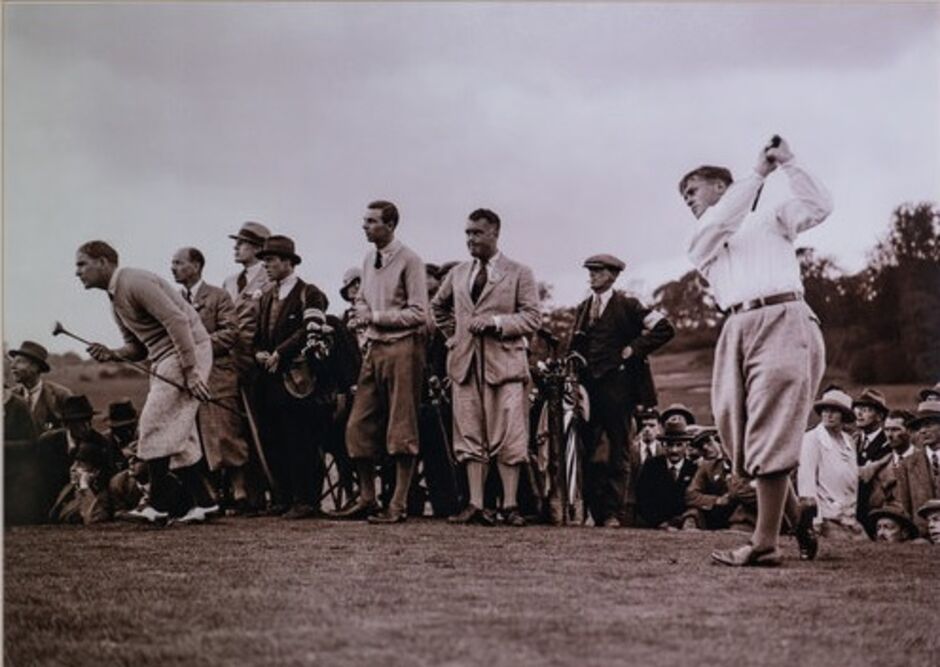
Bobby Jones teed off at four in the afternoon on 18 June 1926 alongside Rowland Jones, a legendary English professional who had first played the Open in 1893 and was already 55 years old at the time (Bobby was 24). The course record was 70 strokes, and the young American signed a 66, although it’s important to emphasize that the key was not the WHAT or the HOW MUCH, but the HOW. He hit all the fairways from the tee and 17 greens in regulation on a course that was very long at the time, as Bobby hit a 4-iron seven times, either as a second shot or on two of the par 3s, and reached the green in two on all four par 5s of the course.
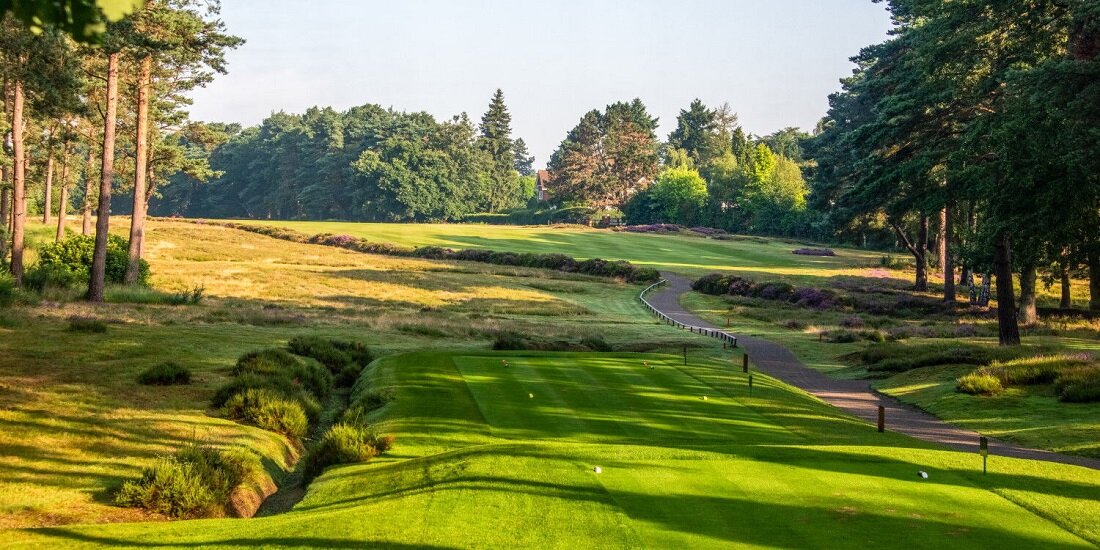
At this point, it’s worth pausing. This week, in the Senior Open, the Old course at Sunningdale is played as a par 70, while Bobby played it as a par 72, as holes 2 and 10, now long par 4s, were played as par 5s back then. However, the distance Bobby Jones played is very similar to what Jiménez, Olazábal, and company will face. On 18 June 1926, the scorecard marked a distance of 6,472 yards, compared to the 6,682 yards marked in this Senior Open. The difference, as you can see, is not significant almost a century later, but as Jones expressly noted in writing at the time, they actually played a course significantly longer than the scorecard indicated, so the difference, 99 years later, must be very small. In fact, this week we will have up to eight holes on the course that will be played at very similar, even identical, distances: holes 1, 4, 5, and 9 on the front nine; and holes 12, 13, 16, and 17 on the back nine.
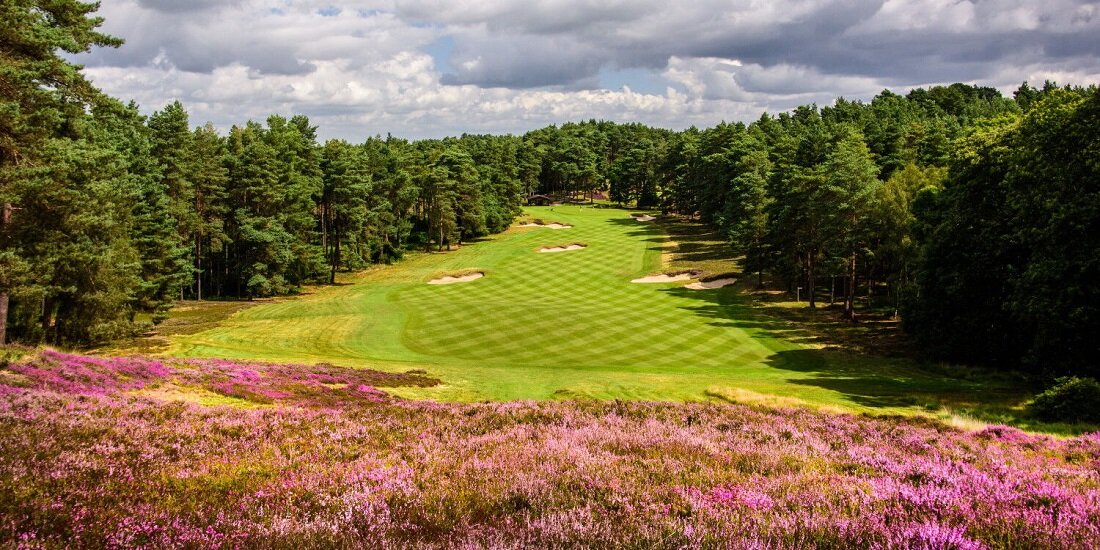
Time, indeed, has stood still at Sunningdale once again, surely one of the few courses in the world where major competitions are held and where it is still possible to make a visual comparison between what was played a century ago and what is played now, because the design has not been altered one bit since then. The original design, inaugurated in 1901, is by Willie Park Jr., although Harry Colt improved the placement of some greens, tweaks that were already in place when Bobby played in 1926 and remain to this day, although logically in this last century, some conditioning improvements have been made, and some tees have been lengthened a bit, but without really altering the essence and form of the course already tweaked by Colt).
We mentioned that Bobby reached the four greens of the par 5s, and it’s very interesting to see what club he used for the second shot, among other things, to give that round all the value it deserves: he hit the brassie (what would be a 3-wood today) twice, once with a 1-iron and once with a 2-iron. Also, as will happen this week if the wind’s intensity and direction allow, Bobby drove the ball from the tee to the vicinity of the green on two short par 4s, holes 3 and 9. So, time perfectly and orderly stopped.
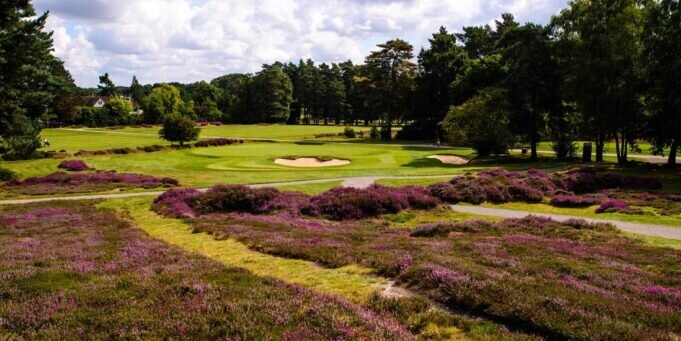
Bobby Jones signed a 66, by the way, having made only one putt from beyond two metres and leaving countless birdie opportunities from distances ranging from one and a half to twelve metres. In fact, he totalled 33 strokes with the putter and another 33 with the rest of the clubs. In Jones’s own opinion, from tee to green, he only missed one shot in the entire round; the rest were, yard up or down, exactly as he had envisioned them in his mind, whether they were drives, brassies, 1, 2, or 4-irons, mashies (what would be a 5-iron today), or whatever was needed. That error occurred on hole 13, a par 3, where he hit a 4-iron and sent the ball into the bunker, from where he made a great recovery and holed a par putt from just over a metre.
One last anecdote. This qualifying round for the Open was played by Bobby Jones with a new driver that he would never abandon until he left competition in 1930. It belonged to the course professional, the Scotsman Jack White, who had named the club Jeanie Deans, after a literary heroine by the writer Walter Scott, also Scottish. Today, replicas of Jeanie Deans are still made, although none have the charm of the one crafted by White himself, a highly reputed clubmaker, as well as the winner of the 1904 Open.
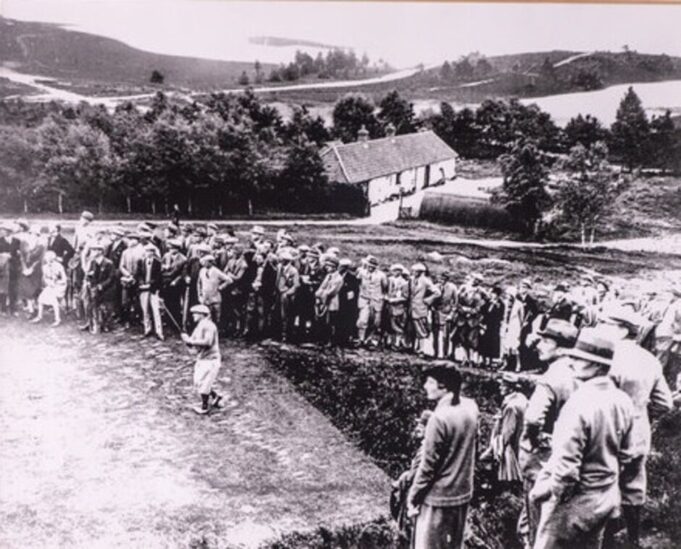
That round by Jones was 4-4-4-3-3-4-4-3-4 for the first nine and 4-3-4-3-4-3-4-4-4 for the second, only ‘threes’ and ‘fours’. At the time, that total was a -6, and today, with similar distances, it would be a -4. It is more than likely that it will be surpassed this week, but since time stopped on that 18 June 1926, surely not many will match or surpass it. The next day, 19 June 1926, Jones signed another great scorecard, this time with 68 strokes, but despite the small difference from the previous day’s score, only two strokes, the extraordinary amateur player never even compared them.
For these great players, there are many ways to score a 66, and even a better result, but surely only one can be considered without dispute the best round of their life. And Bobby always had a clear view on this. Not only him, but all those who had the fortune to witness that great moment. In the book Bobby’s Open by Steven Reid, one of the main sources for this report, at least three extracts from chronicles of the time referring to that legendary round are collected: Bernard Darwin for The Times, Charles MacFarlane for the Evening News, and George Greenwood for the Daily Telegraph. And they all agreed on one crucial point: they had never seen anything like it and never (they dared to predict) would they see it again.