



– The Masters celebrates this week its 90th edition, a round number that gives cause to recall (for many) or even discover (for some) details that forged this fabulous sporting event, the last to join the exclusive roster of golf’s Majors, but after all also the pioneer in so many matters since its very inception
– Pioneer, from the outset, it was from the very moment when Clifford Roberts and Bobby Jones, the two great architects of the tournament, conceived it as four rounds in four days from its first edition (1934), when the Open and the US Open were still decided over four rounds, yes, but in three days, with a final day of 36 holes (the PGA, at that time, was still played in match play format and the different elimination rounds were held over six days). Another trait of absolute pioneering and highly exotic was the presence of two Japanese players in the third edition (1936), Chick Chin and Torchy Toda, invited by Clifford Roberts… In the first two editions only Americans had played (the vast majority), and some Englishmen and Canadians, so chronologically the fourth nationality represented in the tournament was Japanese. And so it remained until 1940, the seventh edition, in which an Australian (Jim Ferrier) and two Argentinians (Martín Pose and Enrique Bortolino) appeared for the first time
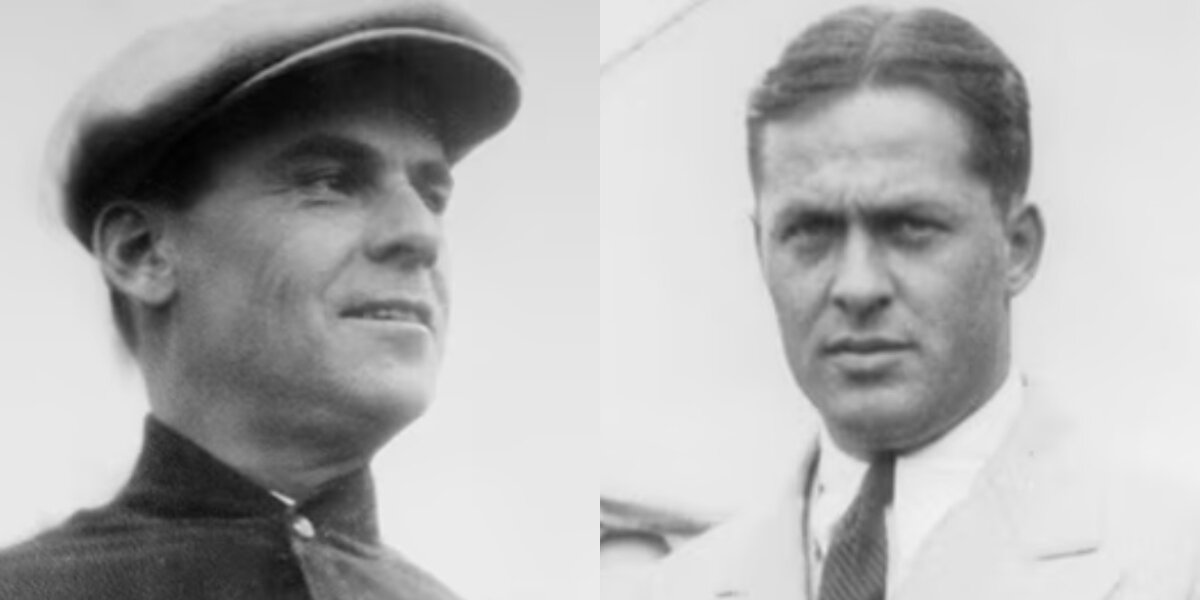
– The Masters celebrates 90 editions, but not under that exact denomination. The first five editions (1934-1938) were played under the name Augusta National Invitation Tournament because Bobby Jones found the notion of a “masters” tournament, which is how Roberts wanted to call it almost from the start, somewhat arrogant or lacking in modesty. Jones finally conceded, in view of the success of the first five editions, so in this year 2026 the tournament marks 85 editions with its legendary and definitive denomination, Masters Tournament
– The Masters turns 90 this week, then, and also 85, but furthermore 70 editions have passed since another truly fundamental milestone, namely the establishment of a cut after the first two rounds. Up to twenty editions of the tournament were played without a cut, very much in the style of what later became the WGCs or what are now some Signature Events on the PGA Tour, but from the twenty-first edition (1957) the Masters finally introduced a cut that then included the top forty. This pruning was established for the same reason it had previously been imposed at the Open and the US Open: the significant increase in the number of competitors. In any case today a Major would not be understood without a cut after 36 holes… Fortunately
– By the way, cruel fate decreed that that first cut was missed by Ben Hogan by a single stroke… The legendary Texan was 46 and had already won his nine majors, but he would still play another nine Masters editions afterwards, the last of them at the age of 55, and he would never miss a cut again…

– Let us now focus on this ninetieth edition which will get underway next Thursday. A lot of time has passed, but the Masters is still a youngster: when its first edition was played 92 years ago there had already been 68 editions of the Open, 37 of the US Open and 16 of the PGA, for a total of 121 Majors, although all of them, the 121, took place without, strictly speaking or officially, that ‘Major consciousness’ which would be forged later with a legitimate and even rightly retroactive character
– Let’s see what happened in the ninetieth edition of the other three Majors. The Open, the great dean, was held in 1961 and the winner was Arnold Palmer. The ninetieth edition of the US Open (1990) coincided with the third and final victory in that tournament for Hale Irwin. And Padraig Harrington snatched victory from Sergio García in the final holes of the ninetieth edition of the PGA (2008). Well, that’s shaping up to be an interesting club of 90th winners…
– Let us go further, resorting to other sports and events with a similar or even greater historical legacy, which have also passed their ninetieth edition more or less long ago. In this regard, the four tennis Grand Slams are a perfect fit:
– Wimbledon has been contested since 1877 and reached its ninetieth edition in 1976 with a headline winner, a certain Bjorn Borg
– The US Open began in 1881, but reached its ninetieth edition in 1970, before Wimbledon, with another great classic as winner, the Australian Ken Rosewall
– Roland Garros was born in 1891 and Jim Courier prevailed in its ninetieth edition (1991)
– The Australian Open, for its part, held its first edition in 1905 and another Swede, Thomas Johansson, won the ninetieth edition (2002). Two Swedes, as you can see… Perhaps a nice and fanciful omen for Ludvig Aberg and Alex Noren, the two Swedes present this week at Augusta National
– And the Tour de France? Yes indeed, the French race has been run since 1903 and marked its ninetieth edition in 2003, although in that case there was no winner (let us hope this is not any fanciful omen…), since the name of Lance Armstrong, initially the winner of that edition, was erased from the roll of honour due to that scandalous doping case, without the victory being awarded to the second-placed rider (Jan Ullrich)
– The Giro d’Italia was run for the first time in 1909 and Danilo di Luca was proclaimed winner of the ninetieth edition (2007)
– The Vuelta a España, for its part, will still have to wait a little while. The first edition of the Spanish tour (1935) was held a year after the Masters’ first edition, but so far only 80 editions have been contested…
– One can also review the winners of the five monuments, the cycling classics par excellence, which also boast a centennial history. The ninetieth edition of Milan–San Remo was won by the Russian-born, Belgian naturalised, Andrei Tchmil in 1999 (on this front there is no possible coincidence: there are no Belgians or Russians in the Masters this year). The Tour of Flanders reached ninety editions in 2006 and was won by Tom Boonen, another Belgian. Paris–Roubaix reached its ninetieth edition in 1992 with the Frenchman Gilbert Duclos-Lasalle as winner. In Liège–Bastogne–Liège the American Tyler Hamilton prevailed in the ninetieth edition (2003), while the Italian Andrea Tafi did likewise in the Giro di Lombardia in 1996
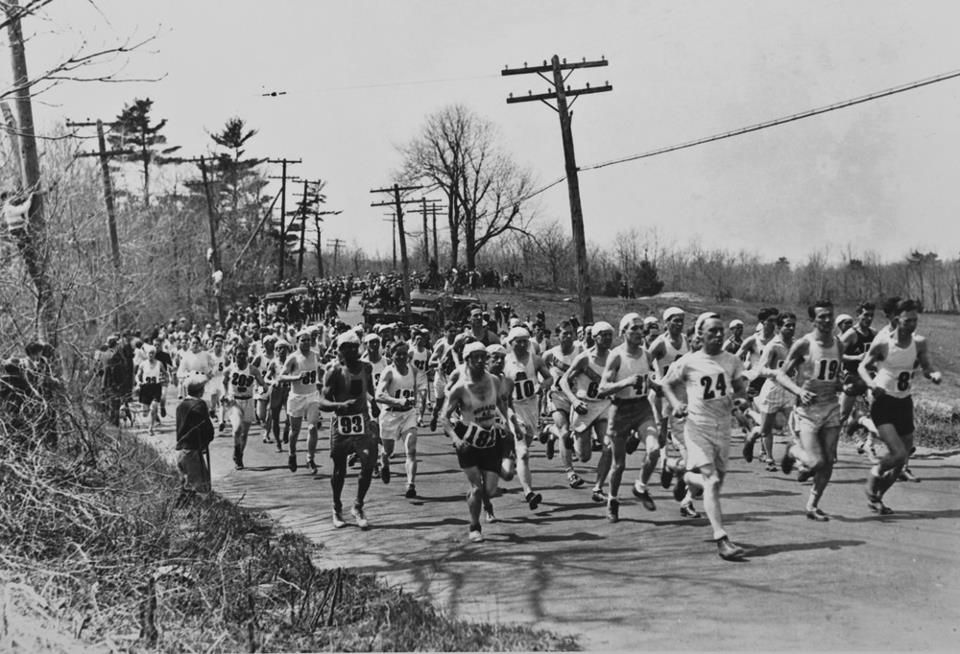
– And here is a sample from the other great inherently individual sport, athletics. The Boston Marathon, which is the oldest, has been run since 1897 and celebrated its ninetieth edition in 1986, a year won by Robert de Castella, the only Australian to have won it to date in the race’s history… Perhaps also an impossible nod to Adam Scott, Jason Day, Min Woo Lee or Cameron Smith, the four Aussies present this week at Augusta National
– One final firework: now that the Masters is about to reach its ninth decade of editions, it may also be worth checking who the winners were in the previous eight decades already completed. Herman Keiser won the tenth edition (1946); Jack Burke Jr. the twentieth (1956); Jack Nicklaus the thirtieth (1966); Raymond Floyd the fortieth (1976); again Nicklaus the fiftieth (1986); Nick Faldo the sixtieth (1996); Phil Mickelson the seventieth (2006) and Danny Willett the eightieth (2016). As can be seen, there are only American and English players… Since the Stars and Stripes do not need any coincidence or nod (they have won 64 of the 89 editions played), perhaps it will suit the interesting squad of Englishmen present this year at Augusta National better (Fitzpatrick, Fleetwood, Hall, Hatton, Penge, Rai, Rose and Willett)