

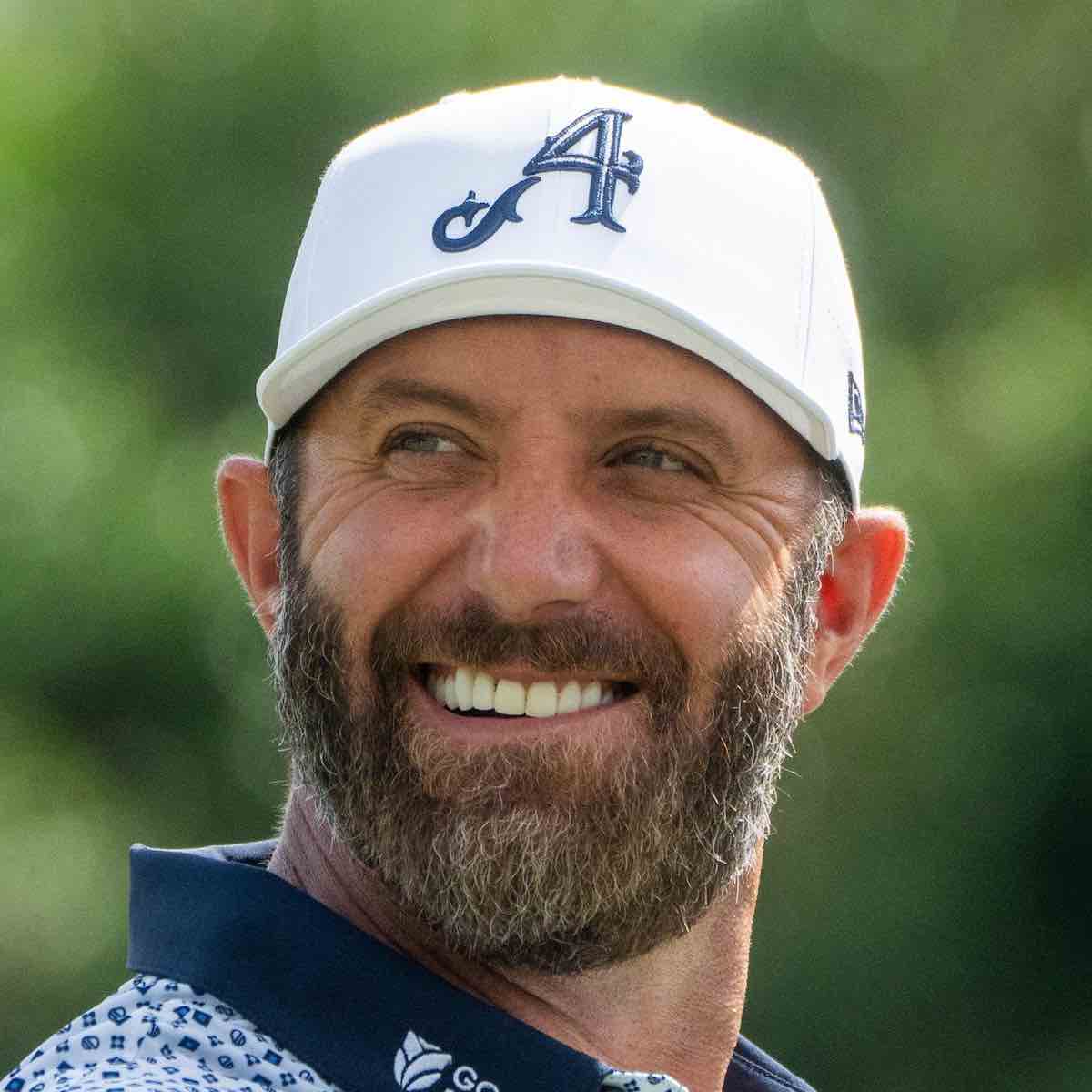
Two cents for every dollar outstanding That was the initial offer that the Fondo de Inversión Pública de Arabia Saudí (PIF) made to players to settle payments on their LIV Golf contracts, according to Gabby Herzig in The Athletic, who cites a source familiar with the matter. A proposal equivalent to 2 per cent of the committed amounts: $20,000 for every million outstanding
That is one of the most relevant details in a report that reveals a new front in the attempt to rebuild the circuit. Dustin Johnson leads a group of more than ten players who intend to negotiate with the Saudi fund compensation for their unpaid contracts. Their claims total more than $100 million and among the individuals identified by The Athletic are also Bubba Watson and Thomas Detry
What they are seeking is what they themselves describe as exit compensations: a payment that allows closing the financial obligations of the first version of LIV. And that negotiation is directly related to their willingness to participate in the next one
According to an anonymous source, none of its members intends to sign the restructuring agreement between LIV and BC Partners in its current wording. It is not, therefore, a collective announcement of definitive abandonment. It is a rejection of the terms currently on the table
Signing the future without having resolved the past
The group’s representation is by David Cornwell, Johnson’s lawyer for years and former general manager of the 4Aces, his team in LIV. Cornwell argues that the players made decisions that altered their careers based on repeated promises from the PIF, the Saudi sovereign fund that financed the circuit before withdrawing its backing in April
“Because they relied on those promises, our group seeks a reasonable exit compensation as part of winding up LIV”, the lawyer explains in a statement provided to The Athletic
Basically it is a pressure strategy for LIV’s future: “The decision to waive potential claims against the PIF and join LIV 2.0 will be heavily conditioned by how the PIF handles the winding up of LIV 1.0”
That is, joining the new project and renouncing potential claims against the fund are not, for these players, two independent matters. Cornwell considers there is reluctance to commit for 2027 while there is not more clarity about compensation for the money owed to them
The more than $100 million mentioned in this report corresponds to the contractual payments claimed by the group. They are not an agreed compensation nor an amount whose collection is guaranteed. Likewise, the two cents per dollar are described as an initial offer from the PIF, not as a closed agreement with the players
Johnson, for his part, has declined to comment through his agent
The PIF sees itself as an investor that stopped investing
The report also includes the position of the other side, although not via an official statement from the fund. According to a source familiar with its stance, the PIF considers itself an equity investor in LIV Golf that has stopped putting in money. The same source says that the fund is not participating in conversations with players or their lawyers
The distinction is important. One thing is that the golfers want to negotiate directly with the party that backed the project and another that the PIF is willing to sit down to discuss those compensations. For now, The Athletic’s information does not describe an open negotiation between both parties. The players ask and the PIF, meanwhile, whistles
LIV expects that the resolution of the claims will be processed through the courts, within the insolvency proceedings. The weight of the players in that process is considerable: the seven largest unsecured creditors are golfers, as are fourteen of the top thirty
DeChambeau is not part of this initiative
There is one name whose absence is worth clarifying: Bryson DeChambeau is not participating in this compensation drive led by Johnson and Cornwell
Several members of Johnson’s group also belong to the collective of players constituted to defend their interests in LIV’s insolvency proceedings. That other group is led by DeChambeau. However, it is not the same initiative, although there is overlap among some of its members
Therefore, the information does not place the two‑time US Open champion alongside Johnson in this claim for compensation from the PIF. Nor does his absence allow deducing what his decision regarding LIV 2.0 will be
The Sunday deadline may be extended
The public appearance of the group coincides with the deadline set for players to commit to the new stage of LIV: this Sunday, 25 October. Nevertheless, BC Partners Credit, the new investor, retains the power to extend the deadline
The pressure also arrives amid a succession of departures. Tyrrell Hatton, Tom McKibbin and Ian Poulter have announced they will not compete in LIV 2.0, while Jon Rahm announced his exit at the start of the month
The group led by Johnson’s rejection of the current wording of the agreement adds another difficulty, but it should not be confused with those already announced departures. Their stance is linked to the terms of the restructuring and how the outstanding accounts are resolved
The outlet also notes that LIV is not expected to announce its players’ commitments one by one while it works with BC Partners to secure participation in 2027. If it finally goes ahead, LIV 2.0 envisages ten tournaments: five in the United States and five in the rest of the world
A warning Cornwell extends to the rest of sport
The discussion about contracts coincides with revelations about payments to the circuit’s management. According to The Athletic, LIV paid more than $15.6 million in retention bonuses to executives during the weeks before filing for Chapter 11 of United States bankruptcy law in September. Among those amounts is a payment of $6,375,000 to Scott O’Neil, chief executive officer of the organisation
Cornwell, meanwhile, has raised the tone of his message and directed it beyond golf
“The PIF was an honourable commercial partner until what we consider its abandonment of LIV golfers”, he says. The lawyer argues that professional leagues and players’ unions in the United States, as well as sports organisations worldwide, should pay attention to this outcome, because, in his view, the way the golfers are treated could foreshadow how the fund would act with athletes in other disciplines